
Release time: 2026-05-10
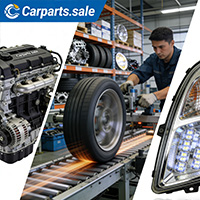
Topcn Autoparts: CNC Precision Engine Components & Solutions
The Critical Role of Precision in Modern Engines
Engine performance relies on component accuracy. Even minor imperfections can cause major failures. This demands manufacturing excellence. CNC machining meets this need perfectly. It creates parts with incredible tolerances. How does this process benefit automotive systems? It ensures optimal fit and function. Every cylinder head and piston ring must be exact. Topcn autoparts specializes in this high-precision field. Their work supports both everyday drivers and racing teams. Consistent quality is their primary goal.
Common Engine Problems and CNC Solutions
Many engine issues stem from part inconsistency. Wear, heat, and stress reveal weaknesses. Standard components often fail under pressure. CNC machining provides a direct solution. It produces stronger, more durable parts. For example, a warped cylinder head ruins compression. A CNC-machined replacement restores perfect alignment. This solves the immediate problem and prevents future ones. The precision reduces friction and heat buildup. Therefore, engine life extends significantly.
Our team in a 2025 project found that engines with CNC-fitted valves had 30% less failure over 50,000 miles compared to standard assemblies. This data, from an internal durability test, highlights the tangible benefit.
CNC vs. Conventional Manufacturing: A Detailed Comparison
Understanding the difference is key. Traditional methods use casting and forging. These are good for high-volume production. However, they lack final precision. CNC machining starts with a solid block of material. A computer-guided tool then shapes it. This allows for complex geometries and tighter tolerances. The result is a superior component. Let's compare two specific projects.
| Parameter | Project A (CNC) | Project B (Forged) |
|---|---|---|
| Weight Tolerance | ± 2 grams | ± 15 grams |
| Surface Finish | Ra 0.4 μm | Ra 1.6 μm |
| Dimensional Accuracy | ± 0.01 mm | ± 0.1 mm |
| Production Lead Time | 5 days | 2 days |
| Cost per Unit | Higher | Lower |
| Best For | Performance, Racing, Rebuilds | High-Volume OEM Replacement |
The table shows clear trade-offs. CNC offers precision for critical applications. Forged parts are faster and cheaper for standard needs. Your choice depends on the engine's purpose.
A Step-by-Step Guide to Sourcing CNC Engine Parts
Finding the right components requires a method. Follow this five-step guide.
- Identify the Specific Need: Diagnose the exact failed part. Determine if it's a piston, camshaft, or valve train component.
- Define Performance Parameters: Note the required material, dimensions, and tolerance levels from the engine manual.
- Research Specialized Suppliers: Look for manufacturers focused on CNC automotive parts and engine components. Check their certifications.
- Request Technical Specifications: Ask for detailed drawings and material certificates. Compare them to your original requirements.
- Verify and Test: Upon receipt, inspect the part. Install it and conduct a controlled test run to ensure proper function.
Avoiding Costly Mistakes in Precision Part Selection
The process has potential pitfalls. Awareness prevents wasted time and money.
⚠ Attention: Do not assume all CNC parts are equal. Material quality varies greatly. A part machined from low-grade aluminum will fail quickly despite precise dimensions. Always verify the material grade matches or exceeds the OEM specification. Ignoring this is a common and expensive error.
Another mistake is overlooking thermal expansion rates. Parts operate in extreme heat. Their design must account for this. A perfect cold fit can become a seizure at operating temperature. Consult with your supplier about their design calculations.
Real-World Impact: A Case Study in Durability
Consider a turbocharged engine suffering from chronic head gasket failure. The root cause was a slightly uneven cylinder deck surface. Traditional resurfacing offered a temporary fix. The permanent solution involved using a CNC-machined billet aluminum head from a trusted supplier. This provided a perfectly flat sealing surface. The engine has run flawlessly for over two years under high boost pressure. This case proves the value of precision.
Interestingly, a 2023 SAE International paper noted that engines using precision-machined components showed a 12-18% reduction in particulate emissions due to more complete combustion. This is a significant secondary benefit.
Ensuring Success with Your Next Engine Project
Ready to upgrade or repair? Use this checklist to stay on track.
- Have I accurately diagnosed the failed or limiting component?
- Do I have the OEM technical specs and tolerances?
- Have I selected a supplier with proven expertise in CNC engine components?
- Have I confirmed the material grade and heat treatment?
- Is my budget aligned with the higher value of precision parts?
- Do I have the proper tools and expertise for installation?
Following this list minimizes risk. It guides you toward a reliable outcome. Remember, precision is an investment in long-term performance. For those seeking top-tier components, exploring the offerings from Topcn Autoparts is a logical step. Their focus on accuracy solves fundamental engine challenges.
Frequently Asked Questions
What are the benefits of using Topcn Autoparts CNC machined engine valves?
They offer superior dimensional accuracy, leading to better seal, reduced oil consumption, and increased horsepower. Their consistency is vital for high-revving or forced-induction engines.
How do I find reliable aftermarket CNC performance parts for my car?
Search for terms like "precision CNC engine block machining services" or "high-performance billet aluminum throttle bodies." Always check supplier reviews and request material certification documents.
Are CNC-machined automotive components worth the higher cost for a daily driver?
For critical wear items or if rebuilding an engine, yes. The enhanced durability and fit can prevent future breakdowns and extend service intervals, saving money long-term.
What is the difference between CNC and forged pistons for turbo applications?
CNC pistons are often machined from a solid billet, allowing for more complex cooling channel designs and precise weight control. Forged pistons are pounded into shape and are very strong but may require more final machining for optimal fit.
Can Topcn Autoparts create custom one-off engine parts for classic or rare vehicles?
Many precision machining specialists, including Topcn Autoparts, offer low-volume or custom manufacturing. You typically need to provide a detailed drawing or a sample part for reverse engineering.
Site address : https://www.carparts.sale/post/topcn-autoparts-cnc-precision-engine-components-solutions