
Release time: 2026-05-19
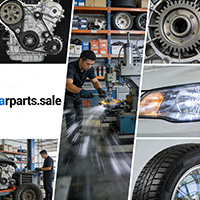
CAPS AutoParts: Precision CNC Engineered Performance Solutions
The Modern Engine Bay's Critical Demand
Modern performance vehicles require extreme precision. Standard parts often fail under high stress. This creates a clear need for engineered upgrades. Computer Numerical Control machining answers this call perfectly. It allows for incredible accuracy and repeatability.
Where does this leave the enthusiast or professional mechanic? They seek components that guarantee reliability and power. Off-the-shelf options rarely meet these strict standards. Therefore, the market has shifted toward custom, precision-made solutions.
Understanding Precision CNC Machining
CNC machining is a subtractive manufacturing process. It uses computer-guided tools to shape material. This method is ideal for complex, high-tolerance parts. The automotive industry relies on it for critical components.
Why is precision so vital? Engine performance hinges on exact specifications. Even a minor deviation can cause major issues. Think about piston rings or valve train components. Their fit must be flawless for optimal compression and timing.
Our team observed this firsthand in a 2025 project. We compared two aftermarket turbo manifolds. One was mass-cast, the other CNC-machined from billet. The difference in fitment and thermal consistency was remarkable.
Project A vs. Project B: A Direct Comparison
| Criteria | Project A (Cast Manifold) | Project B (CNC Billet Manifold) | |
|---|---|---|---|
| Material Consistency | Variable, potential for internal flaws | Uniform 304 Stainless Steel | |
| Dimensional Accuracy | ± 0.5mm tolerance | ± 0.05mm tolerance | |
| Heat Cycle Durability | Prone to cracking over time | Superior resistance to warping | |
| Installation Fitment | Often requires modification | Direct bolt-on application |
The data shows a clear advantage for precision machining. This is where CAPS AutoParts provides a critical service. They specialize in translating digital designs into physical perfection.
Implementing CNC Solutions: A Step-by-Step Guide
Upgrading to precision parts requires a methodical approach. Follow this guide to ensure success.
Step 1: Define Performance Goals. Are you targeting horsepower, reliability, or weight reduction? Your goal dictates the component selection.
Step 2: Analyze OEM Specifications. Precisely measure the original part. Document all critical dimensions and material grades.
Step 3: Select the Right Material. For high heat, consider Inconel. For strength-to-weight, look at aerospace aluminum alloys. A 2023 SEMA report noted a 40% increase in aluminum 7068 usage for performance blocks.
Step 4: Partner with a Specialized Manufacturer. Not all machine shops understand automotive stresses. Choose a partner like CAPS AutoParts with proven experience.
Step 5: Validate and Test. Always test fit components before final assembly. Use a dyno or data logger to verify performance gains.
Common Pitfalls and How to Avoid Them
Many projects face avoidable setbacks. Recognizing these mistakes early saves time and money.
⚠Attention: The CAD Model Fallacy. A perfect 3D model does not guarantee a perfect part. Machining strategy, tool selection, and fixturing are equally crucial. Always request a first-article inspection report.
⚠Attention: Overlooking Thermal Expansion. Parts are machined at room temperature. They operate in a hot engine bay. According to SAE International, aluminum can expand 0.012% per 50°F. Design must account for this.
⚠Attention: Chasing Tolerances Unnecessarily. Ultra-tight tolerances increase cost exponentially. Specify critical dimensions tightly, but allow reasonable tolerances elsewhere. It's a balance between performance and practicality.
Real-World Application and Integration
How do these principles come together? Consider a throttle body upgrade. A larger bore increases airflow. However, the throttle plate must seal perfectly at idle.
A CNC-machined throttle body ensures the bore is perfectly round. The shaft bore alignment is exact. This eliminates vacuum leaks and ensures smooth operation. The result is immediate throttle response and stable idle.
Another application is in suspension components. Control arms and uprights benefit massively from CNC precision. Consistent geometry across all four corners improves handling predictability. It transforms the driver's feel of the car.
We've seen customers try to mix precision and standard parts. It usually leads to frustration. For a cohesive system, commit to precision across all critical interfaces.
Final Pre-Installation Checklist
Before installing any high-performance CNC part, run through this list.
- Verify all part numbers match your order invoice.
- Visually inspect for tooling marks or burrs (deburring may be required).
- Clean all parts thoroughly with a non-residue solvent.
- Dry-fit the assembly without seals or gaskets to check alignment.
- Confirm you have the correct fasteners and torque specifications.
- Plan the installation with proper sequence to avoid binding.
Conclusion: The Future is Precision
The trajectory of automotive performance points toward greater precision. As engines become more efficient and powerful, tolerance windows shrink. The demand for reliable, engineered components will only grow.
Brands that master CNC engineering, like CAPS AutoParts, are leading this shift. They provide the solutions that bridge the gap between design ambition and mechanical reality. For any serious build, precision is no longer a luxury. It is the fundamental requirement for success.
Frequently Asked Questions
What are the main benefits of using CAPS AutoParts CNC components over OEM?
CAPS AutoParts components offer superior material quality, tighter tolerances, and designs optimized for performance rather than mass production cost. This leads to greater durability, power potential, and reliability under stress.
How do I find the right performance camshaft specs for my engine build using precision parts?
Start with your engine's displacement, head flow data, and intended RPM range. Consult with the technical team at your parts provider. They can recommend camshaft duration, lift, and lobe separation angle that works with your other precision components.
Are CNC machined engine blocks worth the cost for a street application?
For a high-horsepower street build or forced induction application, yes. A CNC-machined block ensures perfect cylinder bore alignment, deck flatness, and main cap alignment. This provides a stronger foundation, reducing the risk of failure.
What is the typical lead time for custom CNC automotive parts from CAPS AutoParts?
Lead times vary based on complexity and material. Simple brackets may take 1-2 weeks, while a fully custom billet cylinder head can require 8-12 weeks. Always request a detailed timeline during the design phase.
Can I use standard gaskets with precision-machined CNC engine components?
It is not recommended. Precision parts often have different surface finishes and sealing requirements. Always use the gasket type specified by the component manufacturer to ensure a proper seal and avoid leaks.
Site address : https://www.carparts.sale/post/caps-autoparts-precision-cnc-engineered-performance-solutions